When it comes to traditional bridal fashion, we love seeing brides honour their roots while expressing their personal style, and Tochi Wigwe did just that with her gorgeous traditional bridal looks! 😍
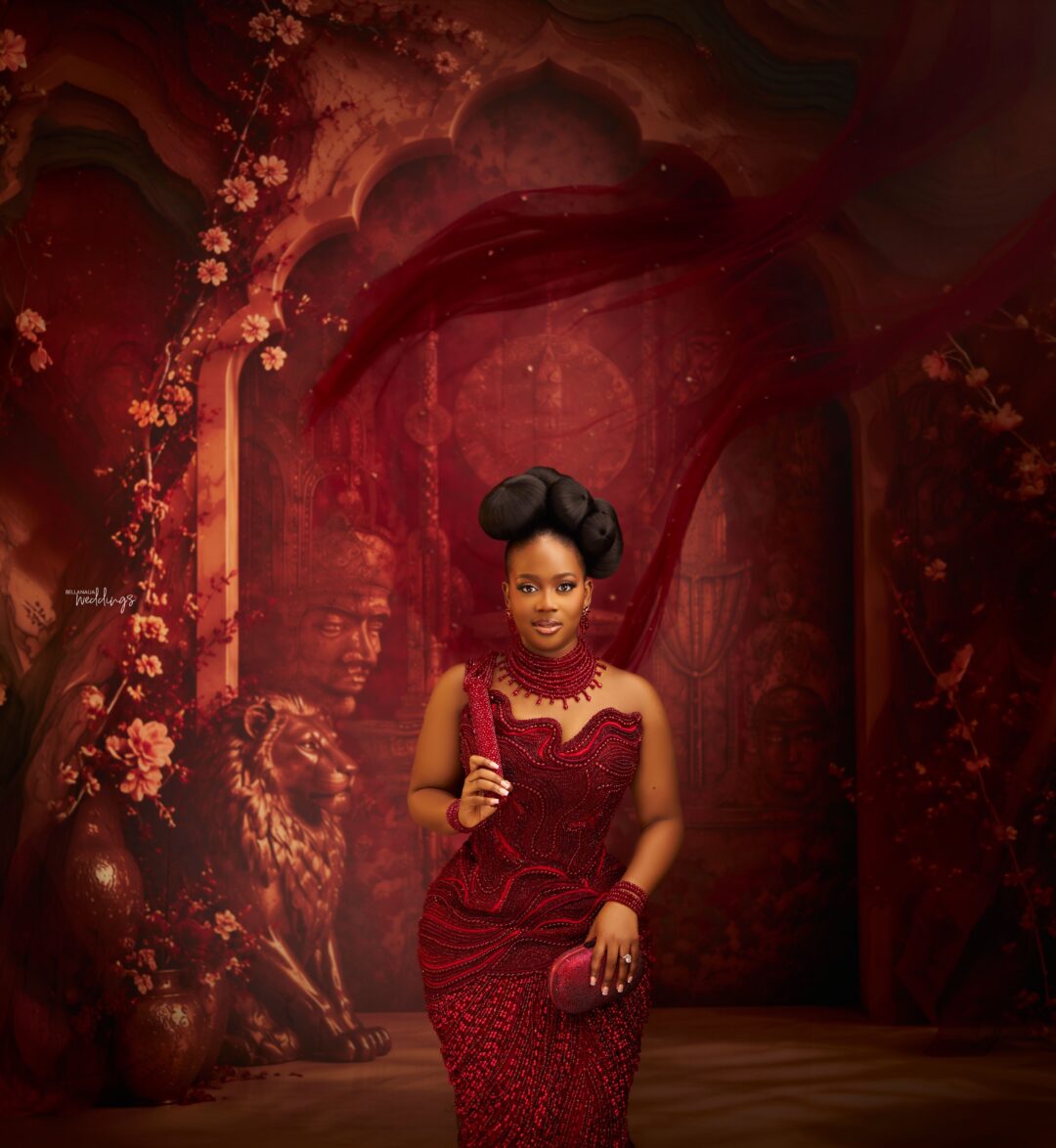
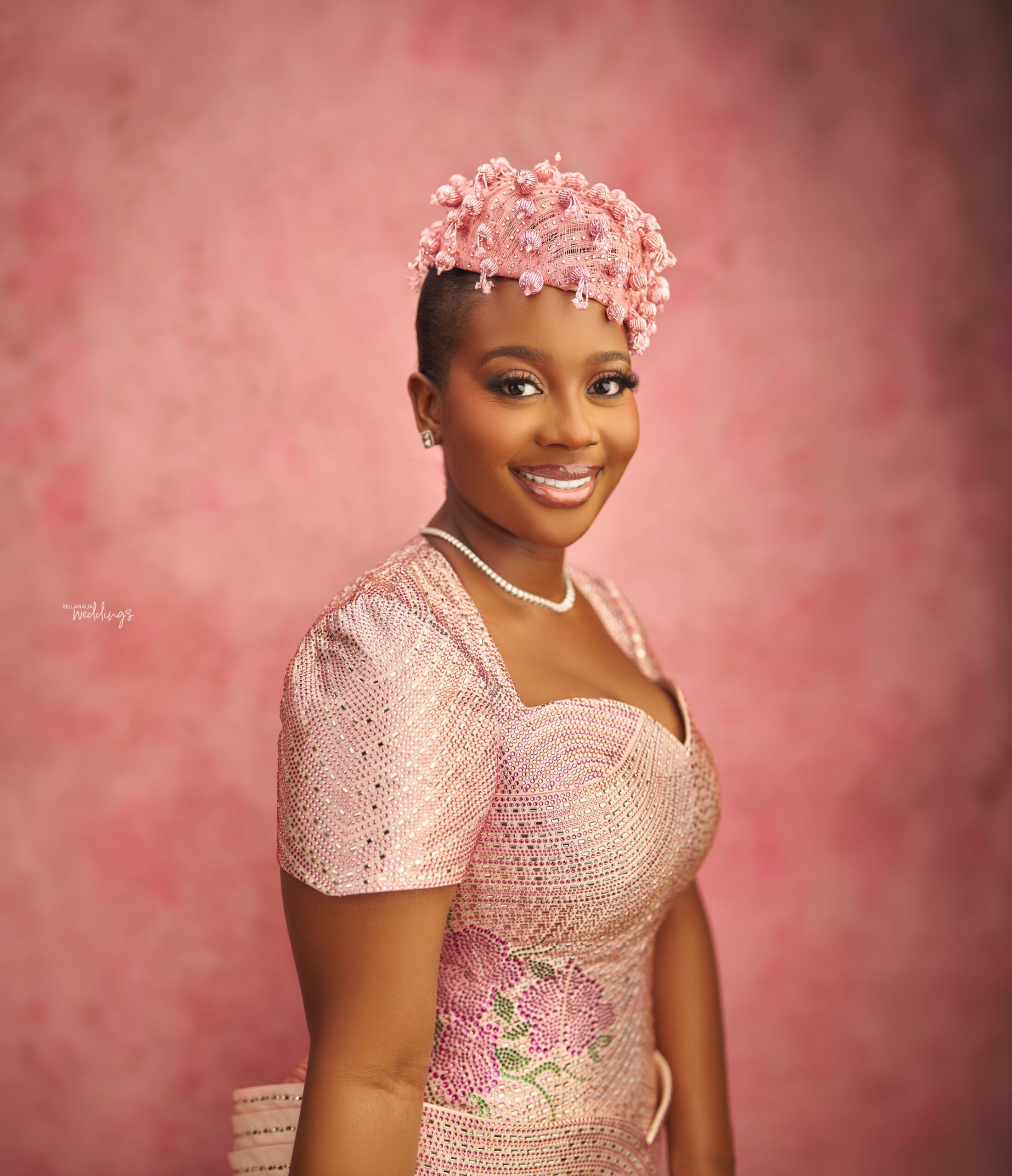
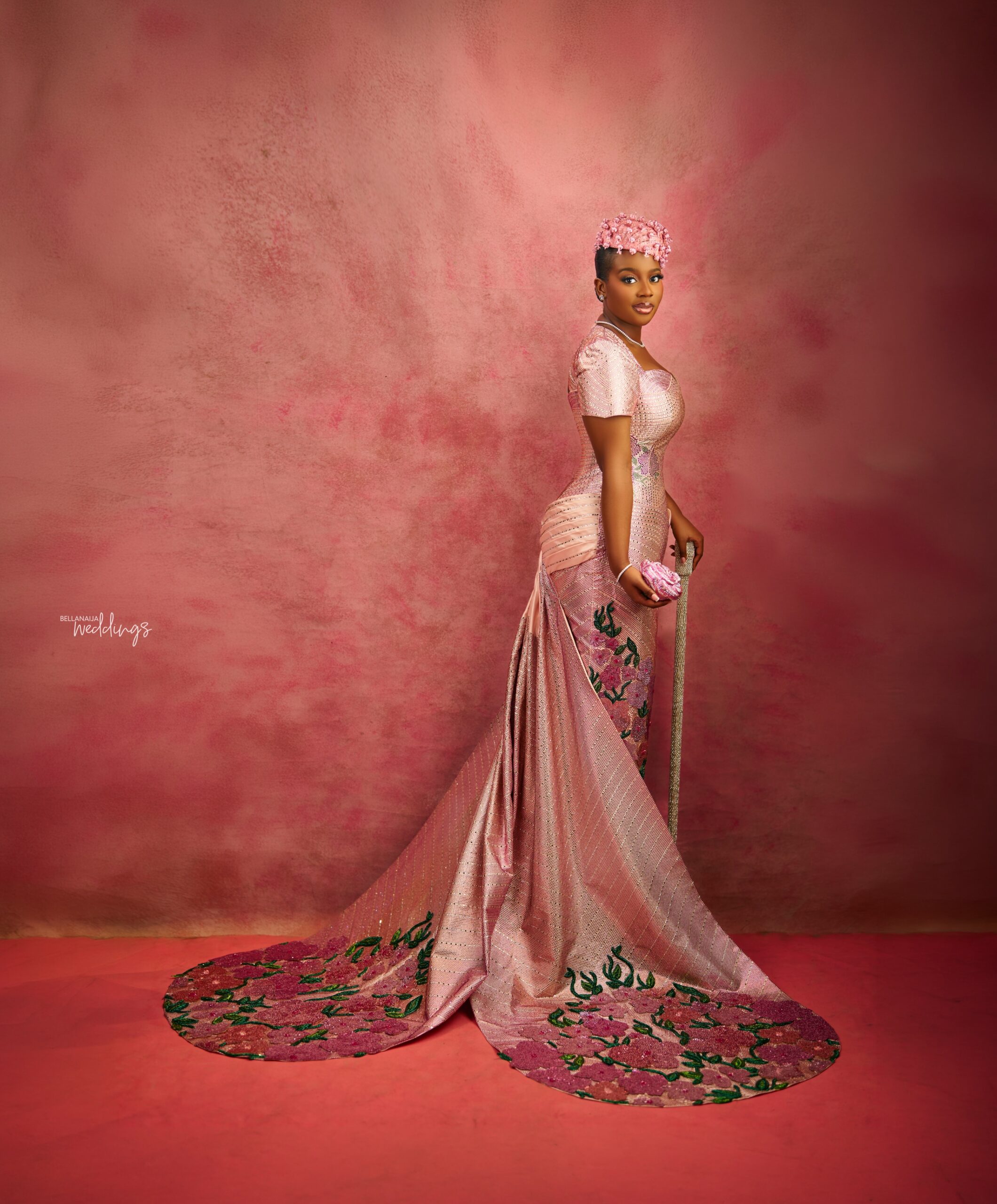
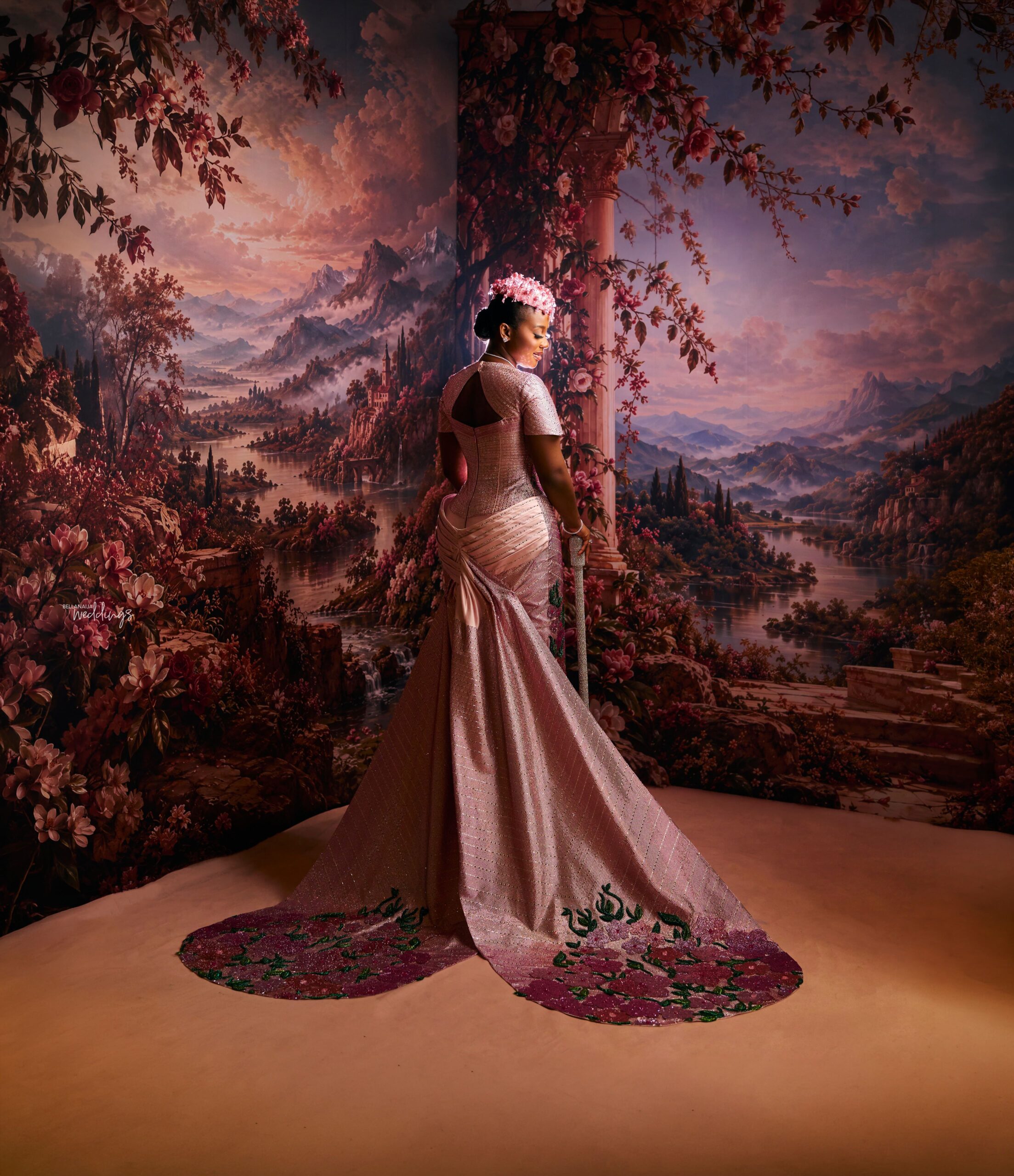
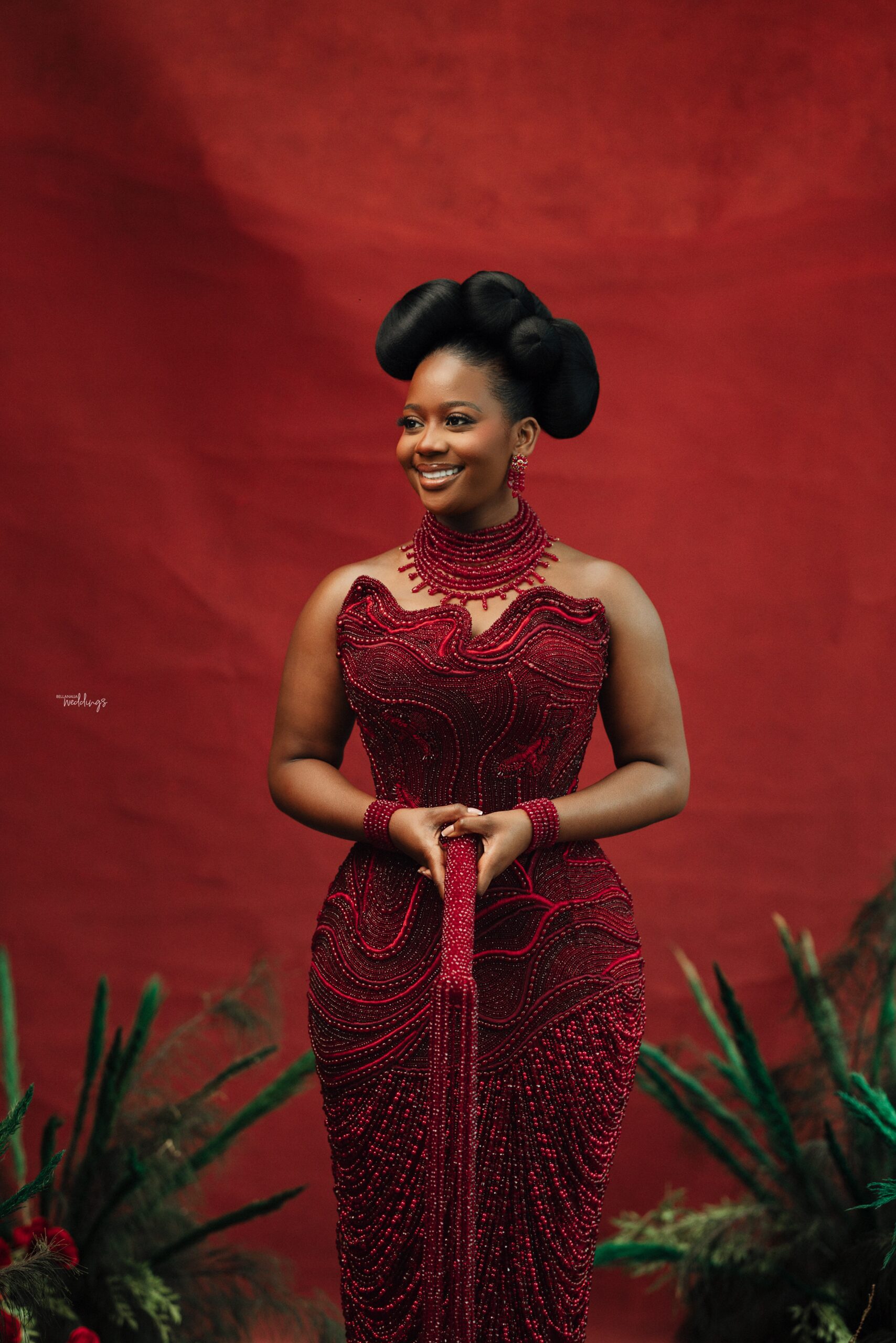
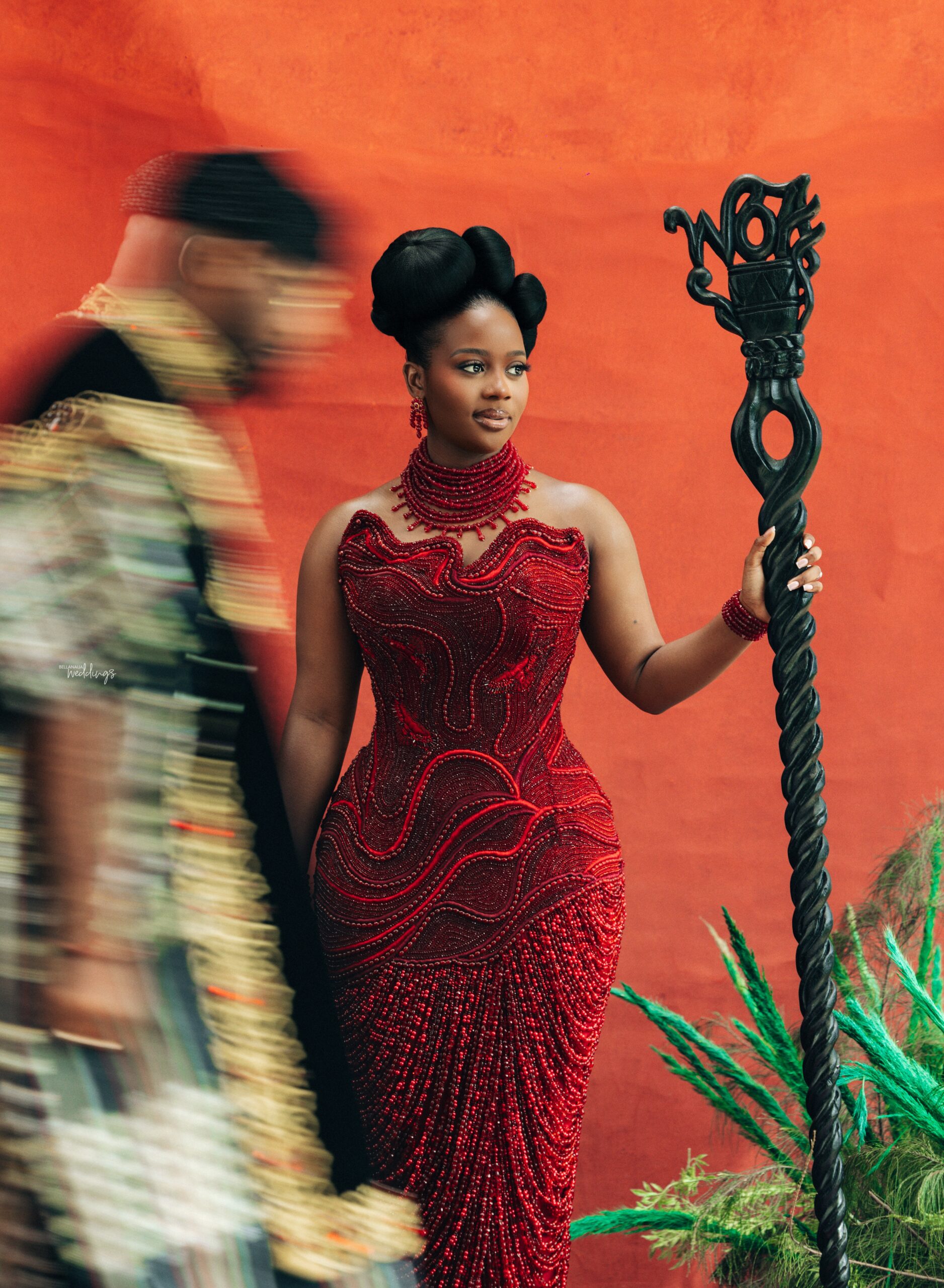
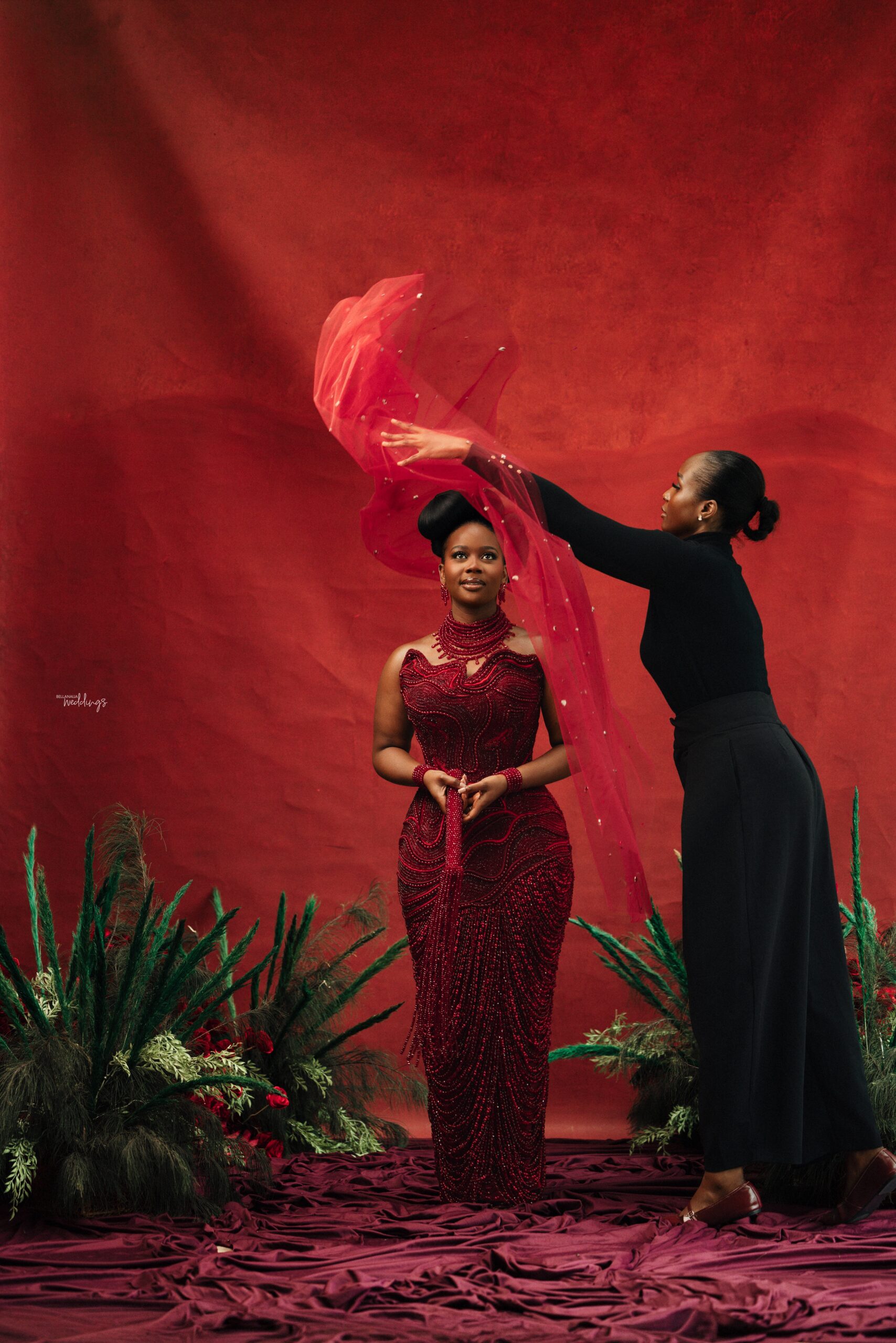
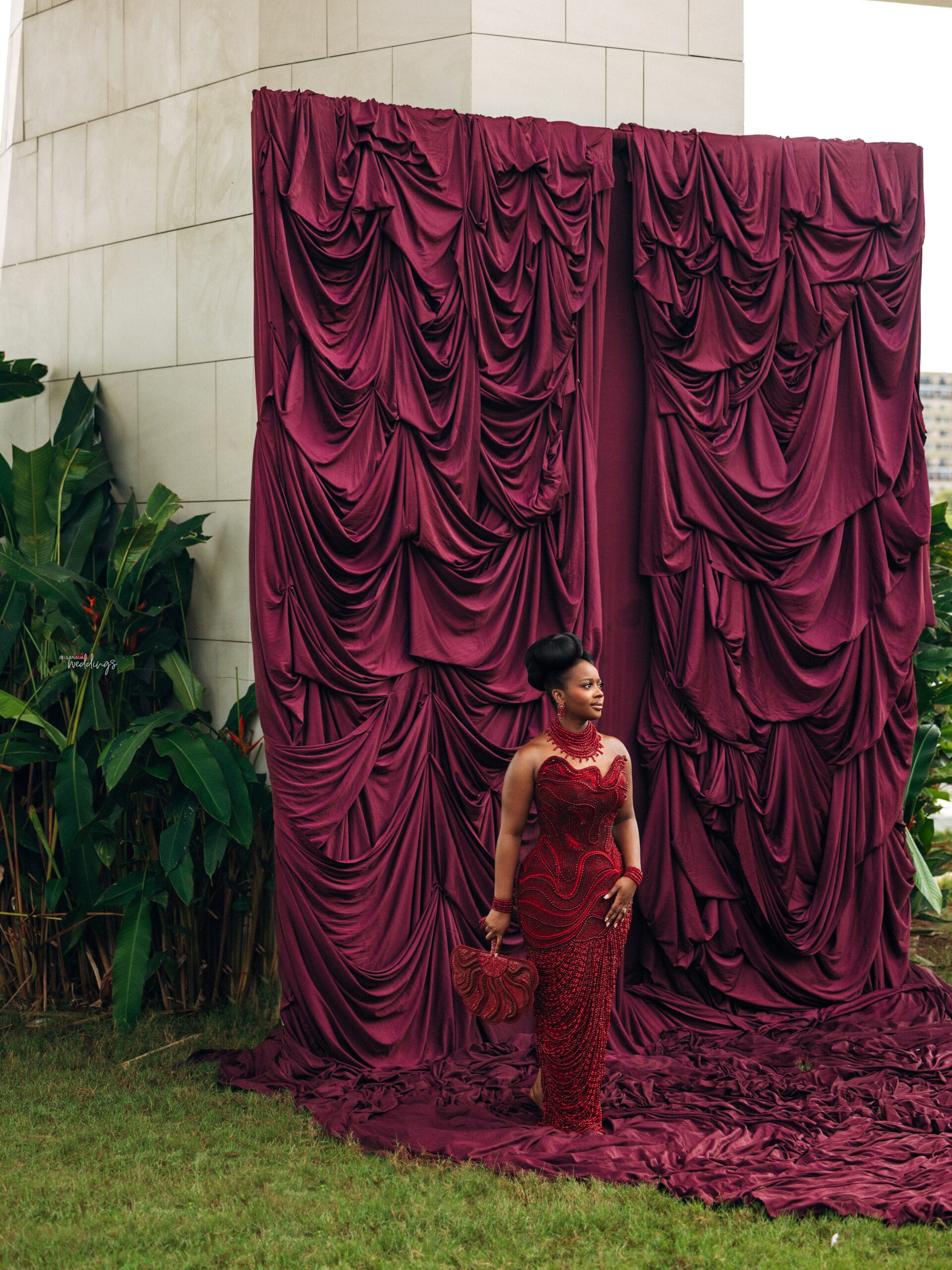
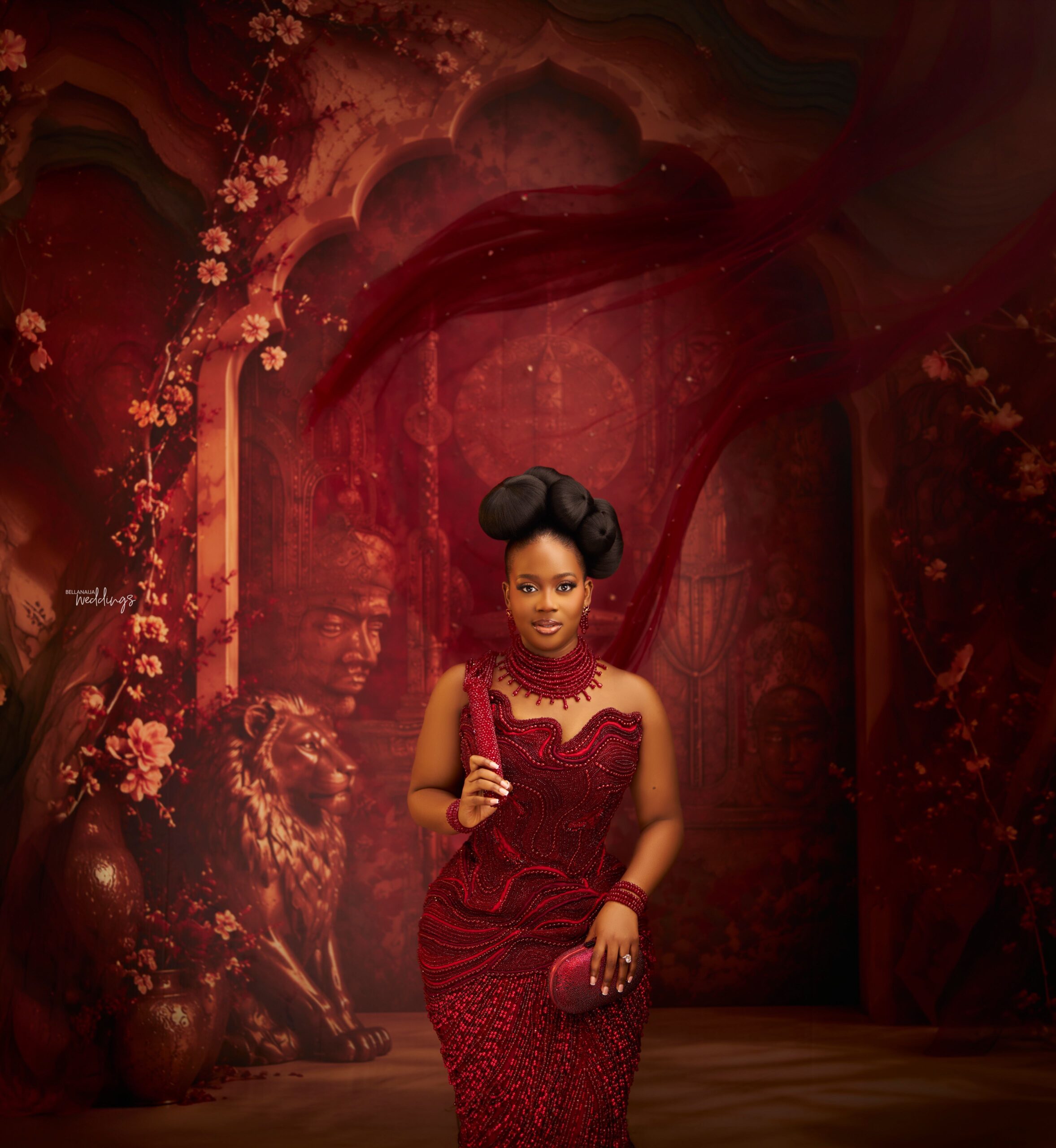
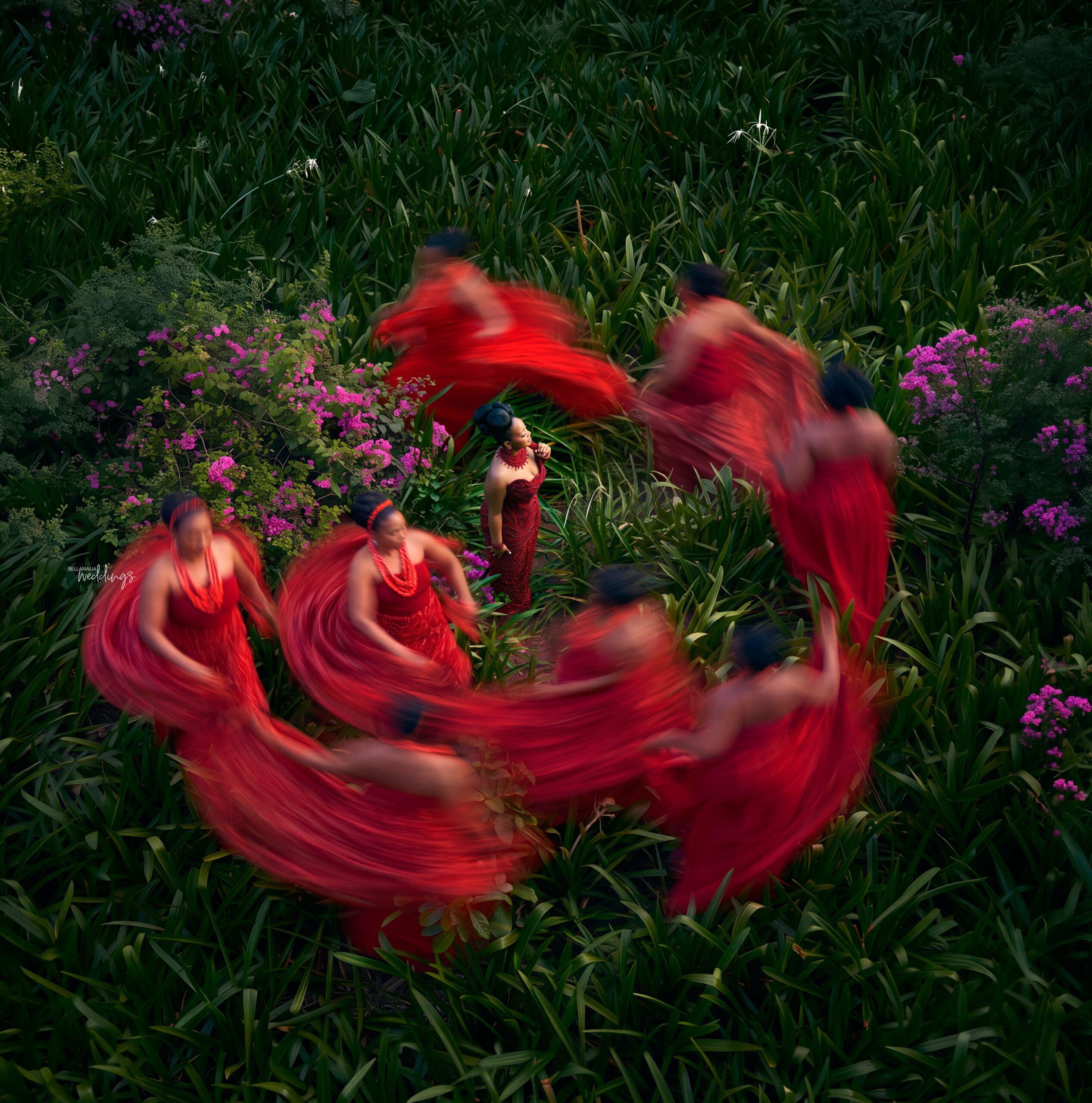
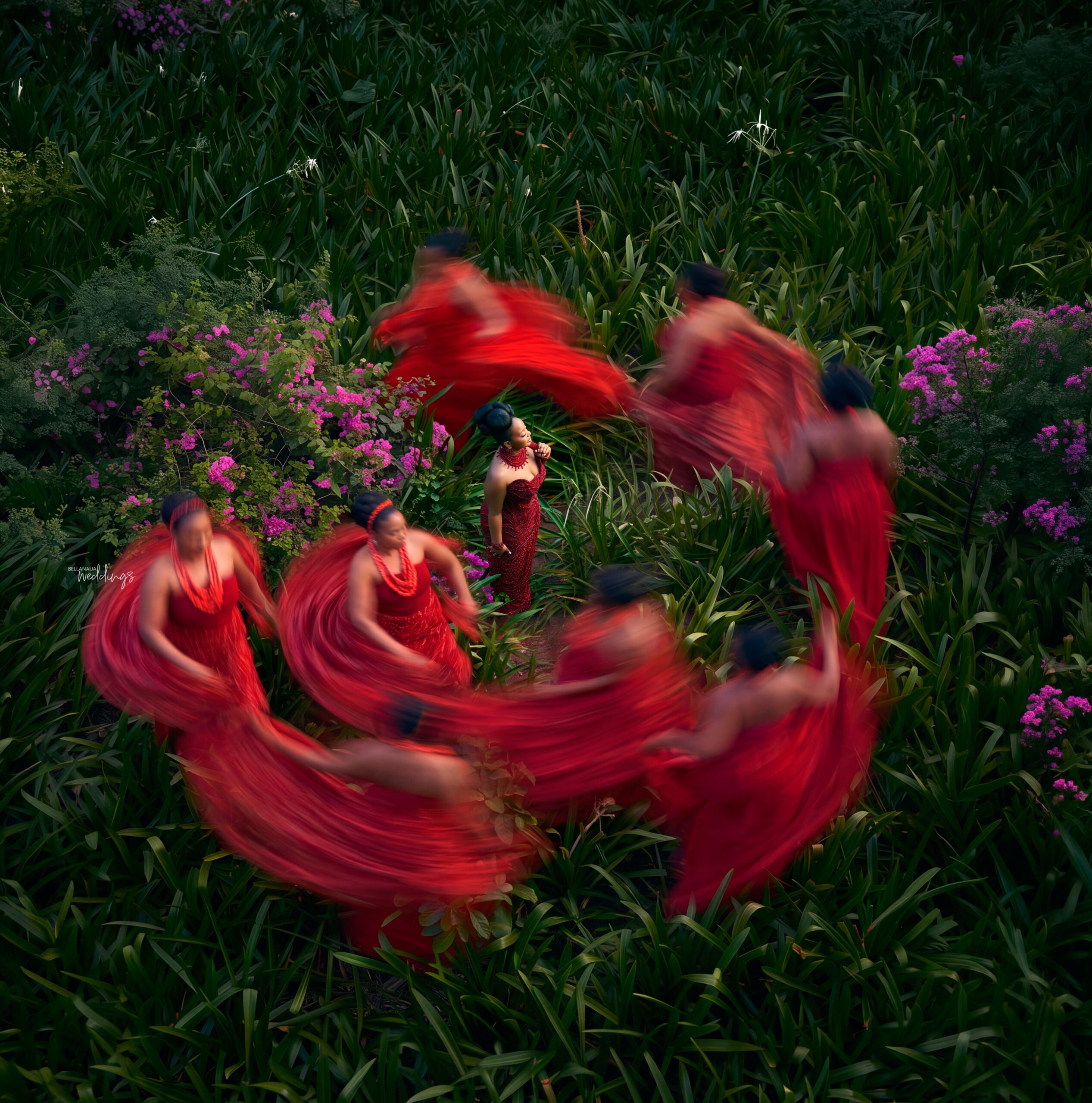
Styled by The Bridal Boudoir Co, each look brought something special to the celebration, giving us a beautiful blend of culture, creativity and contemporary fashion. For her Rivers bridal look, Tochi wore a stunning pink look adorned with intricate crystal embellishments. For her Edo look, she switched things up with a striking interpretation of her husband’s roots.
But beyond the stunning outfits, there’s so much thought that went into bringing each look to life. We caught up with her bridal stylist, who gave us a lovely peek into the creative process, the inspiration behind both looks and the intentional decisions that went into making sure Tochi’s personality and vision shone through every outfit. Trust us, there’s plenty to admire and even more to learn from these beautiful bridal fashion moments.
Let’s get into it!
Could you walk us through the different traditional looks and the inspiration behind each one?
For Tochi, we wanted each look to tell a story. Rather than approach the traditional outfits simply as beautiful wedding ensembles, we wanted to explore her cultural identities through fashion and give each look its own creative expression.
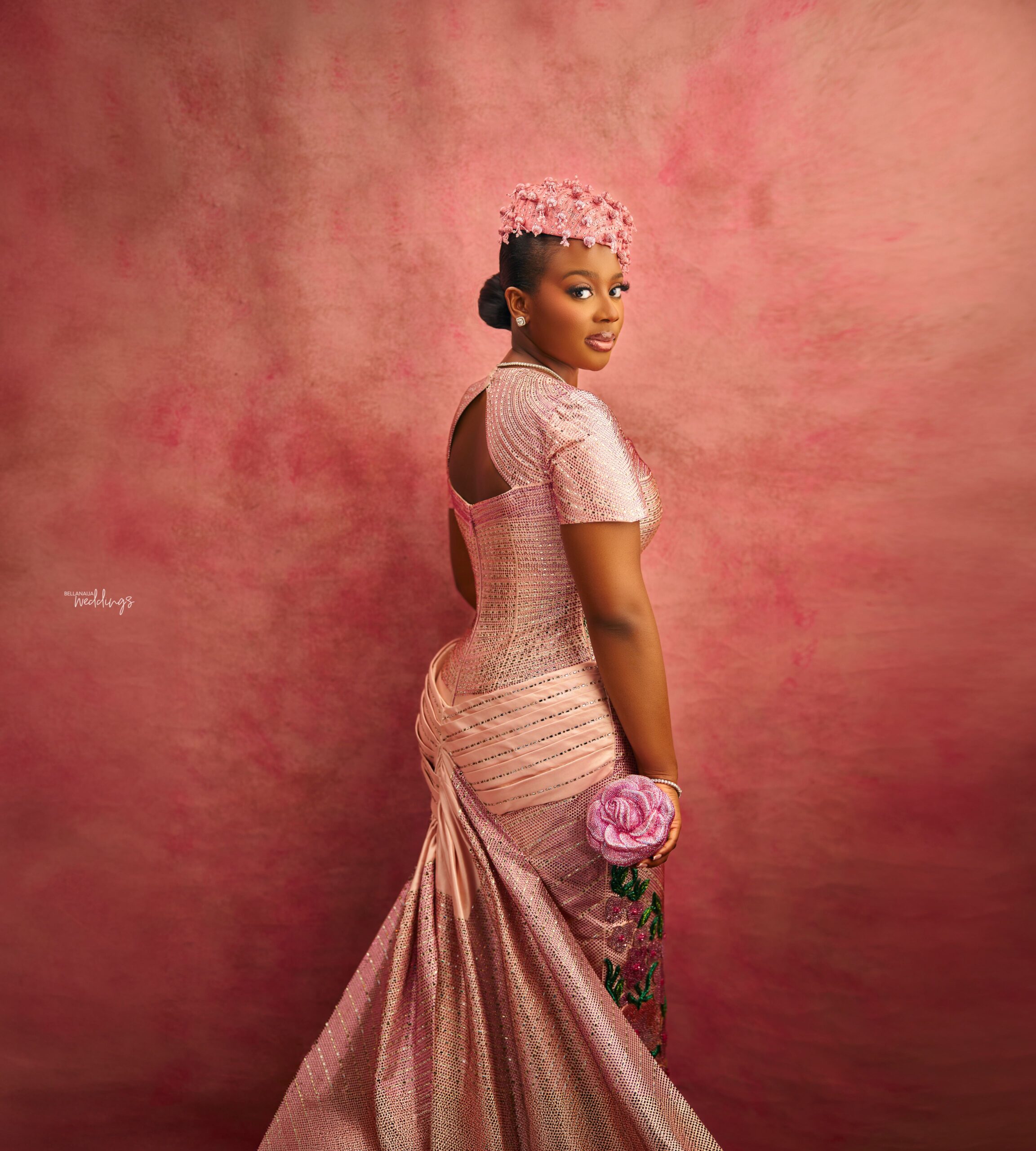
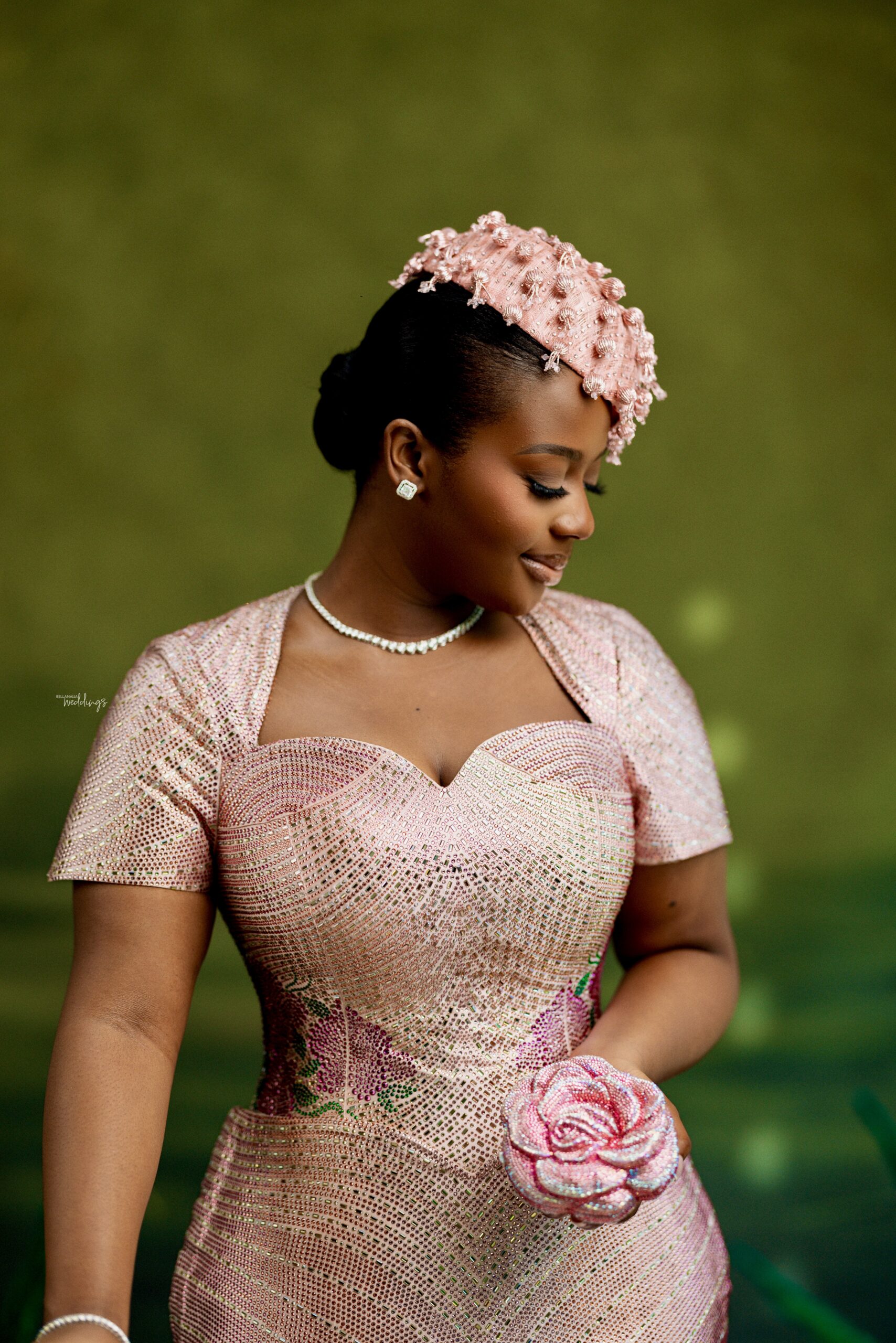
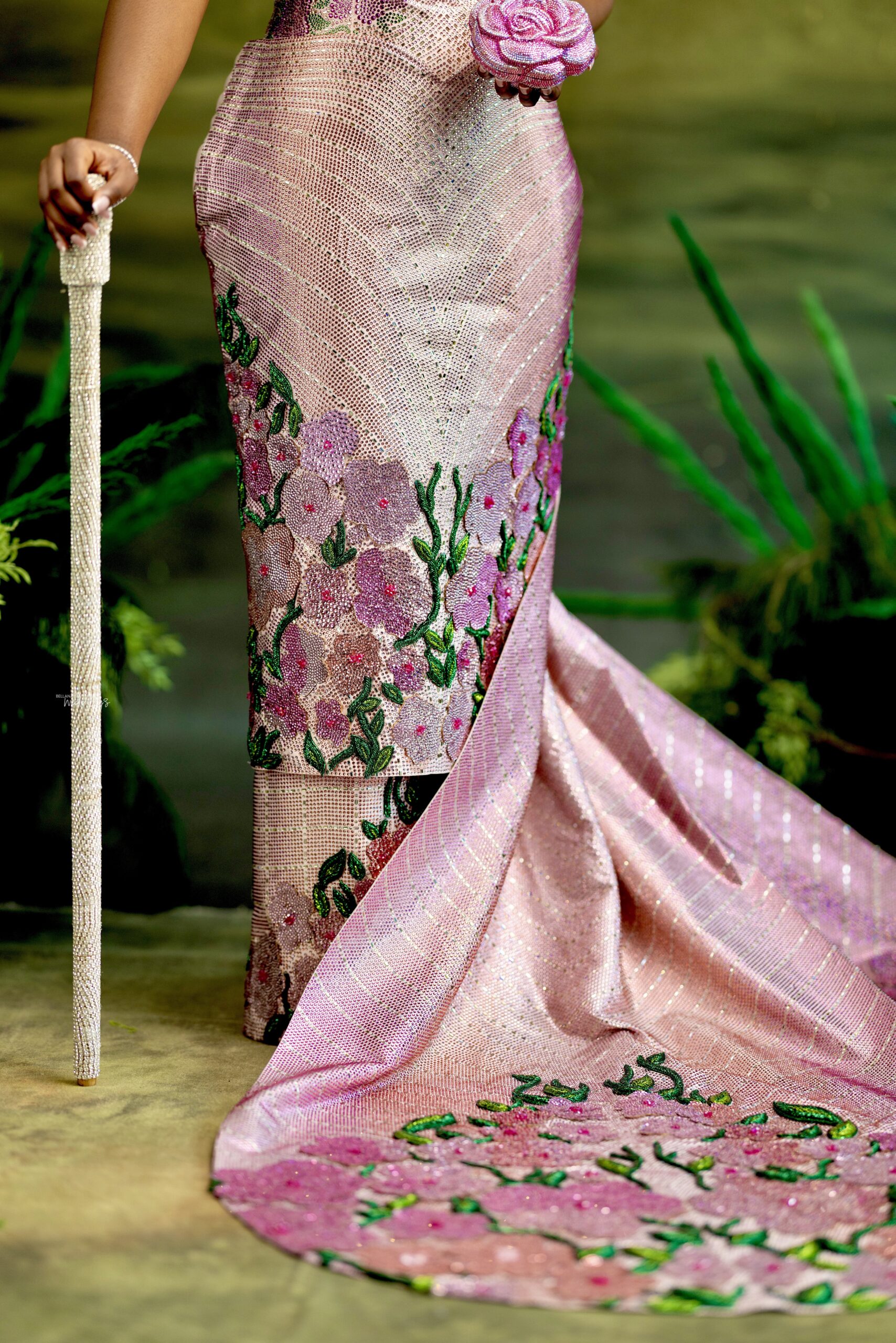
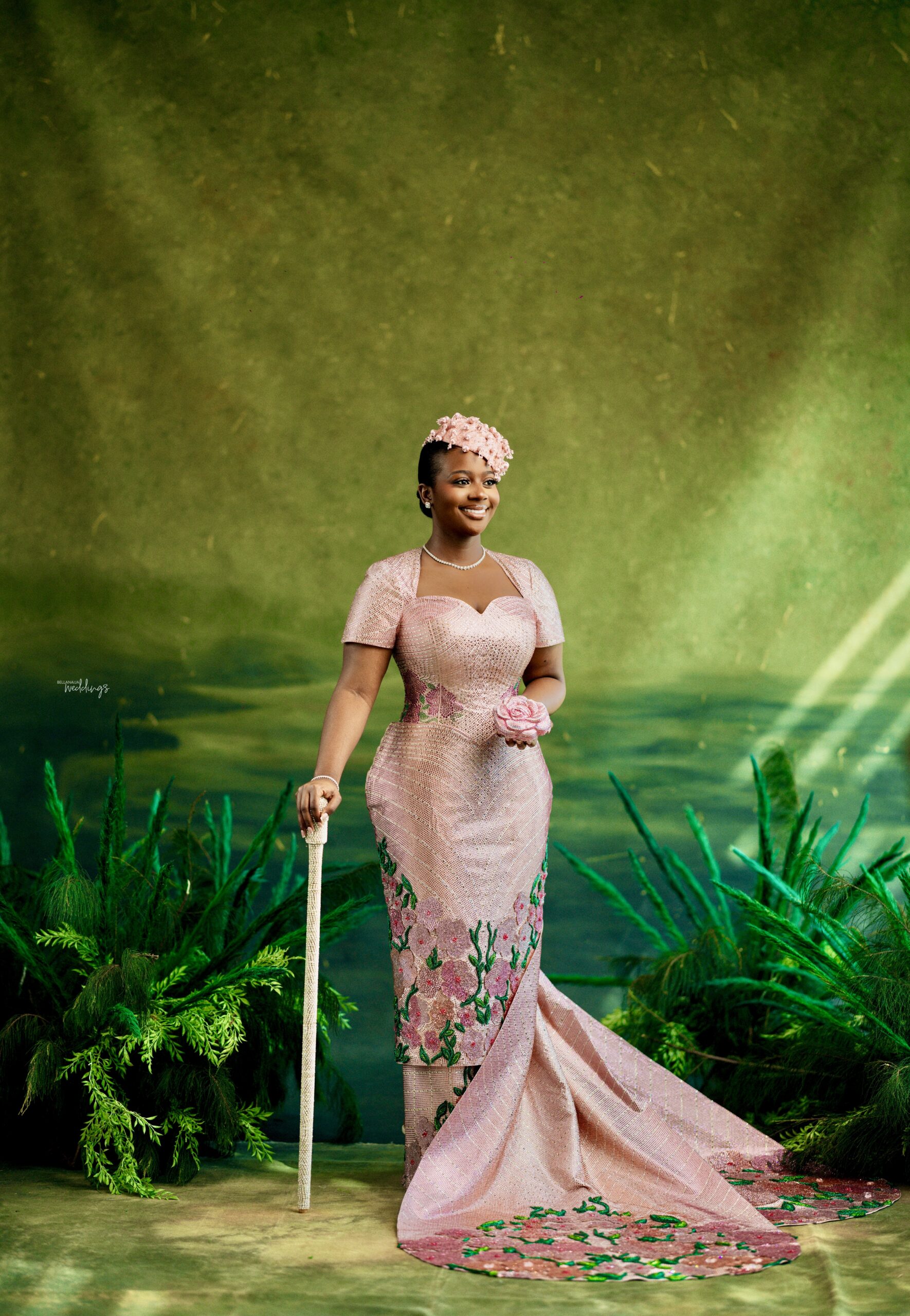
For Tochi’s Rivers look, which was her celebratory look, our creative direction centred around the concept of BLOOM. We wanted to explore the idea of a woman blossoming into a new chapter of her life, using floral references, textures and colours to tell that story. Pink became the dominant colour palette, complemented by intricate crystal embellishments. We deliberately chose to explore an all-crystal treatment rather than rely on more familiar beading techniques, allowing the crystals to become a defining feature of the outfit. Even the train was thoughtfully designed to mimic the fluidity and layering of flower petals, creating a beautiful sense of movement and bringing the bloom concept to life. The styling was equally intentional. We wanted the accessories to complement the drama of the outfit without competing with it, so we opted for a simple diamond necklace and diamond studs. We then introduced a sculptural floral bag, drawing inspiration from the floral petal forms traditionally associated with Rivers bridal culture, alongside an embellished walking stick to complete the look. Every element was considered, from the smallest accessories to the overall silhouette. Our intention was to celebrate the Rivers bride in a way that felt regal, feminine and fashion-forward, while using contemporary design and styling to give a familiar cultural expression a fresh interpretation.
For the Edo look
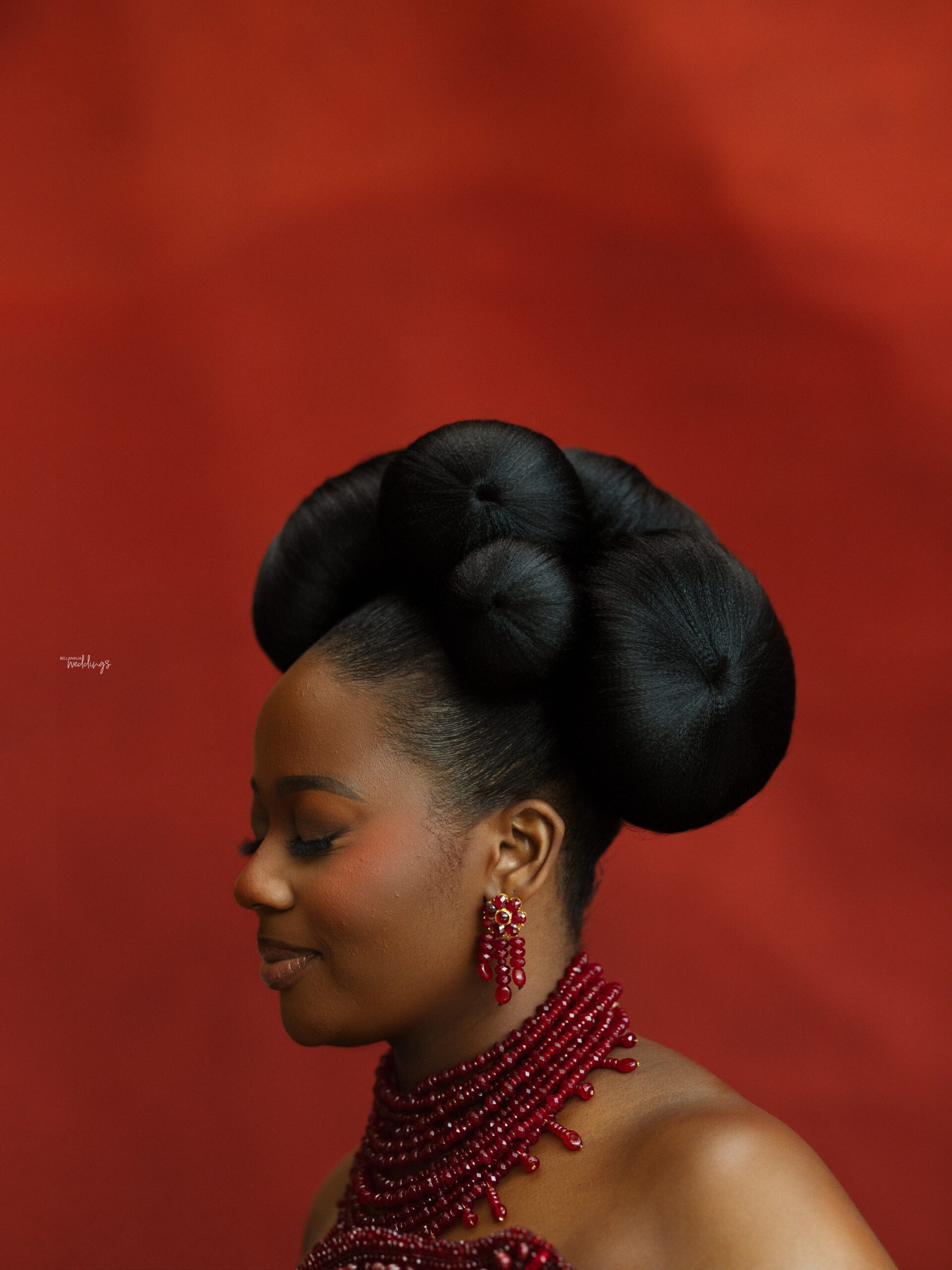
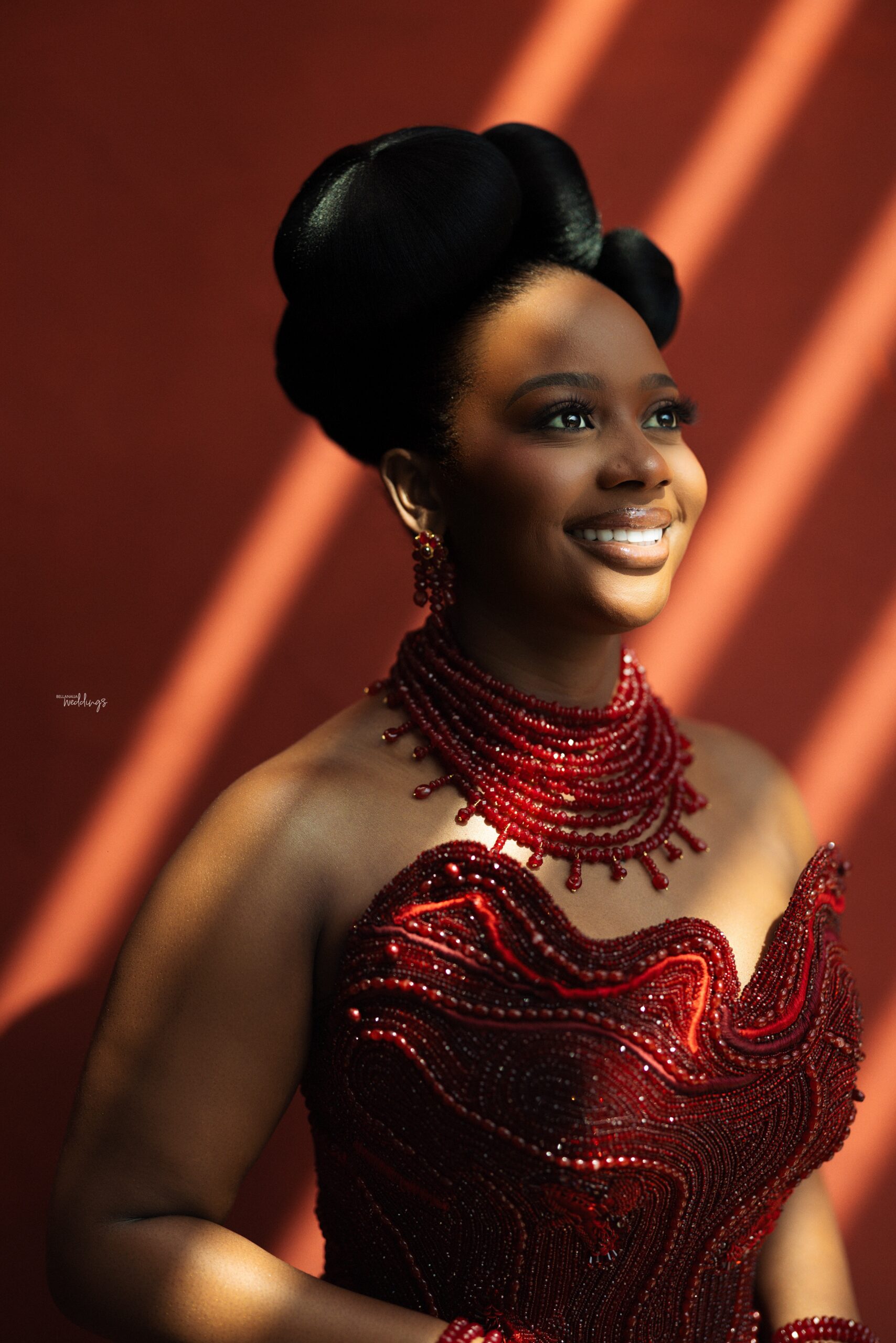
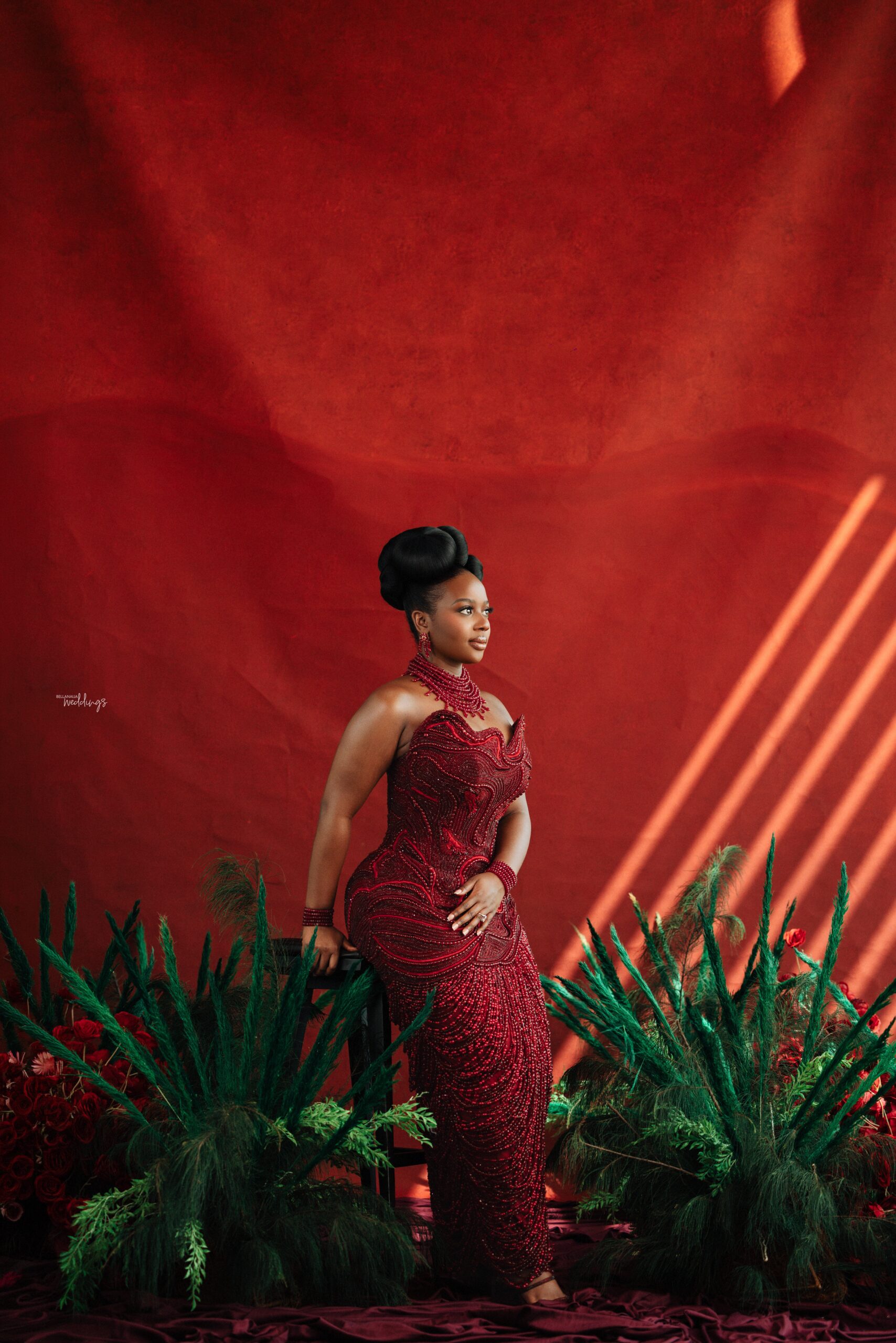
We were very intentional about the creative direction because this was Tochi’s marital look, representing her husband’s heritage and the family she was becoming a part of. We wanted to strike a balance between staying true to who she is while also honouring the new cultural identity she was embracing through marriage. We approached the look through a contemporary fashion lens, reinterpreting Edo heritage in a way that felt elevated and distinctive. Even the hair was a deliberate part of the storytelling. We drew inspiration from traditional Edo forms, particularly the imagery of pots, translating that into a more sculptural interpretation. We also chose to explore ruby corals rather than the more conventional coral styling, introducing a slightly different perspective while retaining that connection to Edo heritage. Every element, from the topographical-inspired patterns and sentimental bird motifs on the dress to the hair and accessories, was carefully considered. Ultimately, we wanted to create a look that celebrated where Tochi was coming from while beautifully representing the family and cultural identity she was embracing.
What was the most challenging part of bringing the bridal looks together, and how did you navigate it?
I think one of the most important aspects of bringing the looks together was ensuring that the bride remained at the centre of every creative decision.
Having worked so closely with Tochi, I understood her personality, her preferences, her expectations and, ultimately, how she wanted to feel and be represented throughout her wedding celebrations. My responsibility was to become the custodian of that vision and, in many ways, her voice throughout the entire creative process.
We were working with different cultural influences, designers, creative interpretations and techniques, and while each look needed to have its own identity, it was equally important that everything felt harmonious and true to who she was.
That meant constantly leading with the bride in mind. Every conversation with a designer, every design refinement, every accessory choice and every styling decision had to come back to one question: does this represent Tochi? Does this reflect her vision? Is this how she wants to show up?
Of course, there was a lot of coordination involved in managing timelines, fittings, alterations and the different creative teams, but beyond the logistics, my role was to hold the entire vision together without ever losing sight of the person at the heart of it.
I think that’s what makes the relationship between a bride and her stylist so important. You have to understand your bride deeply enough to advocate for her, sometimes even articulate things she may not necessarily have the words for, and ensure that she sees herself in every single look.
Ultimately, it wasn’t just about creating beautiful outfits. It was about ensuring that Tochi was represented authentically and beautifully, through and through.
What is one styling detail you think brides often overlook when putting together their traditional wedding looks, and how did you ensure that every little detail came together beautifully for Tochi?
I think one thing brides sometimes overlook is the story behind the outfit.
We can sometimes get so caught up in beautiful inspirations, Pinterest references and what we have seen other people wear that we forget to ask a very important question: what is the story behind this look, and what makes it uniquely yours?
For me, every bridal look needs an identity. There has to be a reason why you are wearing that particular outfit, what it represents, why it is important to you and how it connects to your personal story and cultural identity. I always say there is no one who should wear your wedding looks better than you because they should be an expression of who you are. This is also what informs our creative process at Bridal Boudoir. We don’t just want to recreate an inspiration; we want to understand it, reinterpret it and find ways to make it personal to the bride. With Tochi, every look had its own story, from the cultural references to the colours, embellishments, silhouettes and accessories. Even the finishing touches were selected to reinforce the creative direction rather than simply complete an outfit. Of course, the accessories, hair, jewellery and overall proportions matter, but they are most effective when they serve a bigger story. Ultimately, I believe the most memorable bridal looks are not necessarily the most elaborate; they are the ones that have meaning, personality and a clear identity. When you understand the story you’re telling, everything else begins to fall into place.
Credits
Bride: @otutochiwigwe
Creative Direction and Bridal Styling: @thebridalboudoirco
Bride’s Rivers look: @couturebytabik
Bride’s Edo look: @andreaiyamah.bride
Groom’s styling: @groomsboudoir
Groom’s outfits: @ugomonye.official
Veil: @veiledgloriously
Edo Handfan: @chic_elle.ng
Beaded whip: @beadsbyhayolar
Groom’s staff and accessories: @thebridalboudoirco
Bride’s accessories: @thebridalboudoirco
Bride’s shoes: @renecaovilla @aquazzura
Photography: @bedgepictures @bighweddings @bighstudios
Videography/content creators: @emmy_samako @mcefilms @daleslens


No Comments