
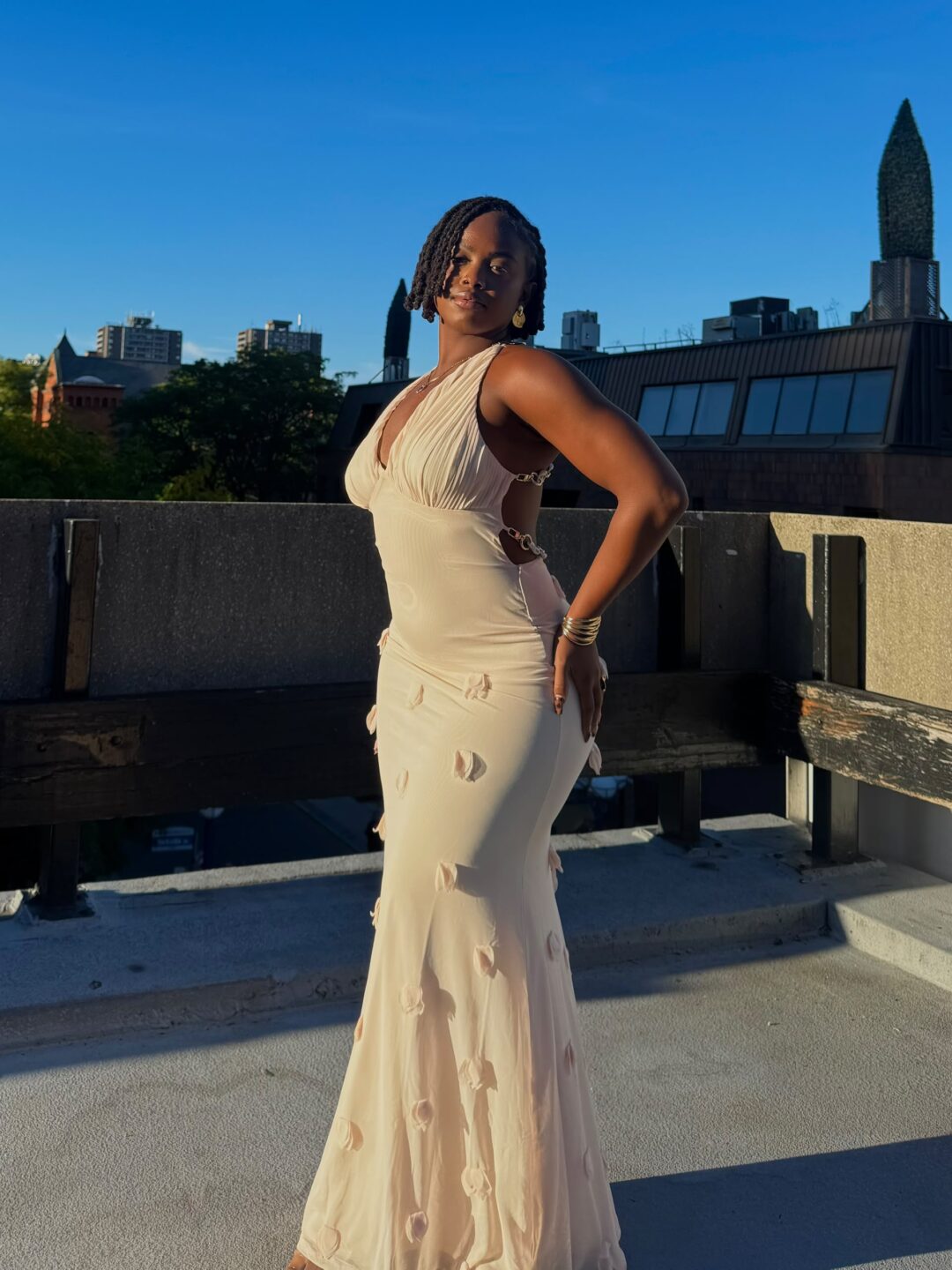
Guests have spent years signalling occasion through volume. A shift towards texture, petals and close detail suggests the room is changing its mind. There is a particular kind of exhaustion that sets in around the fourth wedding of the season. Not with the weddings themselves, which remain some of the best parties anywhere in the world, but with the getting ready. The volume. The structure. The forty-five minutes of assembly before you have even left the house.
Something has been shifting in response to that, and it has been happening quietly enough that most people have not named it yet. For years the question of what to wear to a Nigerian wedding has been answered in one of two ways. Either Asoebi decided it for you, or you went looking through lace dress styles until you found something with enough presence to hold a room. Both answers rewarded size.
Across receptions in Lagos, Abuja and Port Harcourt, that is changing. Guests are still arriving dressed for the occasion, but the signal has moved. It is coming from detail now rather than from scale. Petal-work. Texture. Construction you only really read at conversational distance. The detailed dress is having a moment at Nigerian weddings, and the reasons behind it are more practical than fashion usually admits.
It survives the whole day
A Nigerian wedding is not a two-hour event. Between the ceremony, the photographs, the reception and the dancing, a guest is in the same outfit for most of a day and a good part of an evening. Volume looks extraordinary in the first photograph and becomes a negotiation by the third hour.
A dress that carries its interest in its surface rather than its footprint removes that negotiation. You can sit at a table for an hour without rearranging yourself when you stand. You can move through a crowded reception without managing anything. For an occasion that involves as much physical movement as a Nigerian wedding does, that is not a small advantage.
It photographs differently
Wedding photography has changed. Alongside the official photographer there are now a hundred phone cameras, and the pictures that circulate afterwards are rarely the posed ones. They are candid, they are taken from unflattering angles, and they end up on Instagram within the hour.
Structured volume was built for a considered frontal shot at a distance. Detail is built for exactly the photographs people actually take now, which are close, quick and unplanned. A petal reads at arm’s length. A silhouette needs the whole frame. It does not compete with the bride. This is the part that makes the shift interesting rather than merely practical.
The unspoken rule of guest dressing is that you should look excellent without pulling focus, and that rule has always sat awkwardly against Nigerian occasion dressing, which rewards presence. A detailed dress resolves the tension neatly. It reads as considered and expensive without taking up space in the room. You are clearly dressed for the occasion, and you are
clearly not competing for it.
When you are not wearing Asoebi
Most of this conversation only becomes yours when Asoebi is off the table. If you have been given Asoebi, the decision is made, and the only thing left is how you style it. That is its own skill, and it is not what this piece is about. But a great many invitations now arrive without it. Smaller ceremonies, court weddings, the second and third events of a long celebration, and the weddings where you are a friend rather than family. In all of those you are dressing yourself, and the question becomes harder rather than easier.
The instinct is to reach for whatever reads most clearly as occasion wear, which usually means going bigger. That instinct is worth resisting. Aso ebi does its work through uniformity, not through scale. When you step outside it, the thing you are actually trying to signal is that you took the day seriously. Detail signals that as clearly as volume does, and it does not put you in competition with the people who are wearing aso ebi, or with the bride. It also solves a practical problem. The guest without aso ebi is usually the guest moving between events, sometimes across two days. A dress chosen for detail rather than drama is the one that can do both.
The question nobody prints
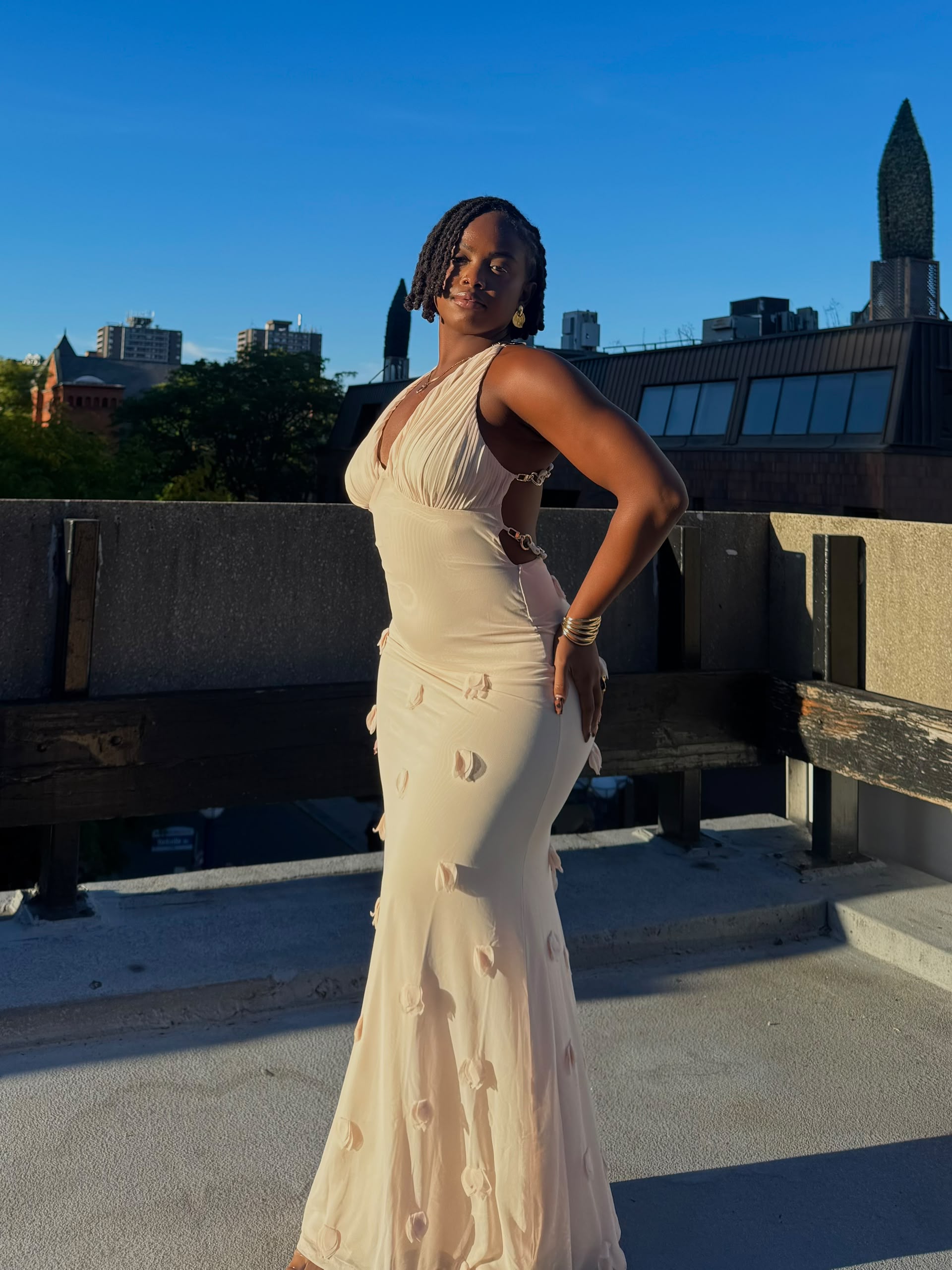
There is a practical problem with occasion dressing that rarely makes it into a style feature, and it decides more outfits than any trend does. A great many beautiful dresses cannot actually be worn to a church service, a family ceremony or a long day among relatives, because of what they ask you to do about coverage. An open back sounds straightforward until you are standing in a pew. A sheer panel sounds elegant until you are photographed against a window. Guests end up buying a dress they love and wearing it somewhere else, or spending the day managing it instead of enjoying it. The dresses worth paying attention to this season are the ones designed with that problem already solved, rather than left for the wearer to solve at seven in the morning.
The piece doing it well
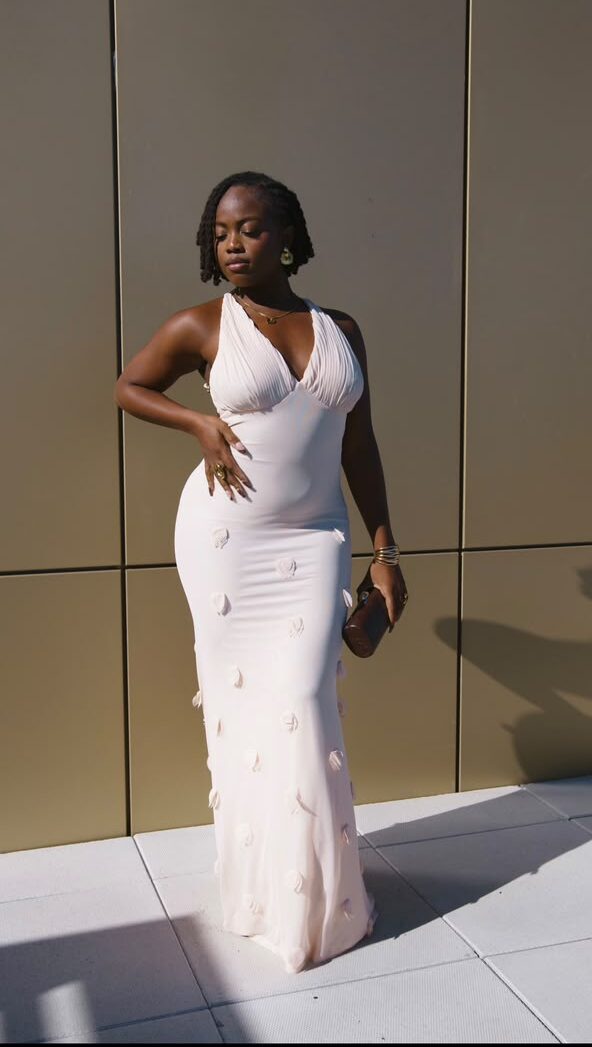
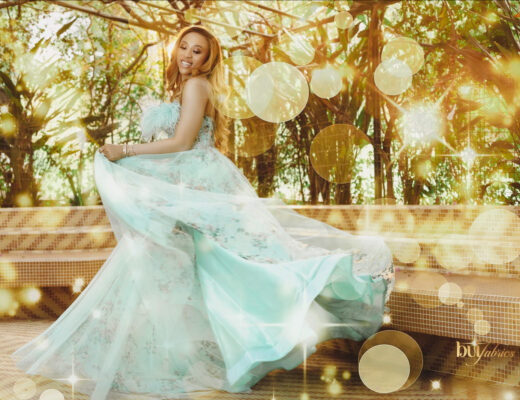
The Willow, from Nigerian label AMARAÉ, is a clean example of the approach done properly. Its petal-work does the occasion signalling, which means the cut itself does not have to shout. The back is open, but it is crossed with chain detailing that holds the line of the dress and softens the opening rather than simply leaving it bare. And the body of the dress covers properly, which is the part that turns an admired dress into a worn one.
That combination is rarer than it should be. Most occasion dresses choose between looking remarkable and being wearable through a full Nigerian wedding day. The Willow is built by a label whose whole collection is organised around the idea that a woman’s day does not have clean edges, and that turns out to suit wedding season unusually well. A guest in Lagos is frequently going from one event to another without going home, and a dress that can handle both is worth more than two dresses that can each handle one.
How to wear it
For a white wedding, keep the styling restrained. Closed heels, one strong piece of jewellery, hair off the face or swept to one side so the back detail is visible. The dress is doing the work and does not need support.
For a reception or an owambe, this is where you can push. Statement earrings, a bolder lip, a smaller bag. Detail holds up against heavier accessories in a way that volume does not, because the two are not fighting for the same attention. For a traditional ceremony, layer over it rather than against it. A structured gele and richer accessories place the dress in the right register without competing with what it is already saying.
One note on fit, since it is the question most often asked and least often answered. Detail travels better across body types than volume does. A structured silhouette has to be built for a frame to work on it, which is why so much occasion dressing gets discussed in terms of what suits slim ladies and what suits plus size ladies as though they were separate problems. Surface interest does not work that way. It reads the same on any frame, and the fit underneath can simply be correct rather than corrective.
The wider point
None of this suggests that volume is finished. Nigerian weddings will always reward drama and the gele is not going anywhere. But there is now a genuine alternative for the guest who wants to look properly dressed, be comfortable at midnight, and not spend the day thinking about her own outfit. On the
evidence of this year’s receptions, that alternative is being chosen more often than it was two seasons ago, and it is going to keep being chosen.
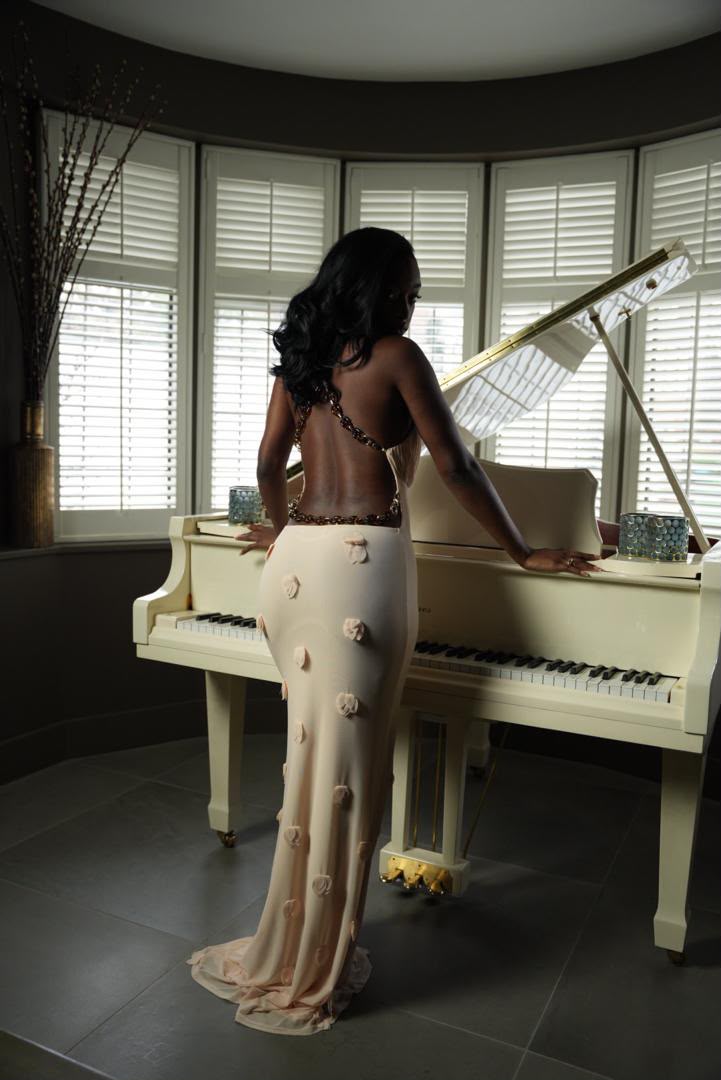
The Willow is available at amarae.io, with delivery across Nigeria and internationally.
—————————————————————————————————————————————————————
Sponsored Content


No Comments